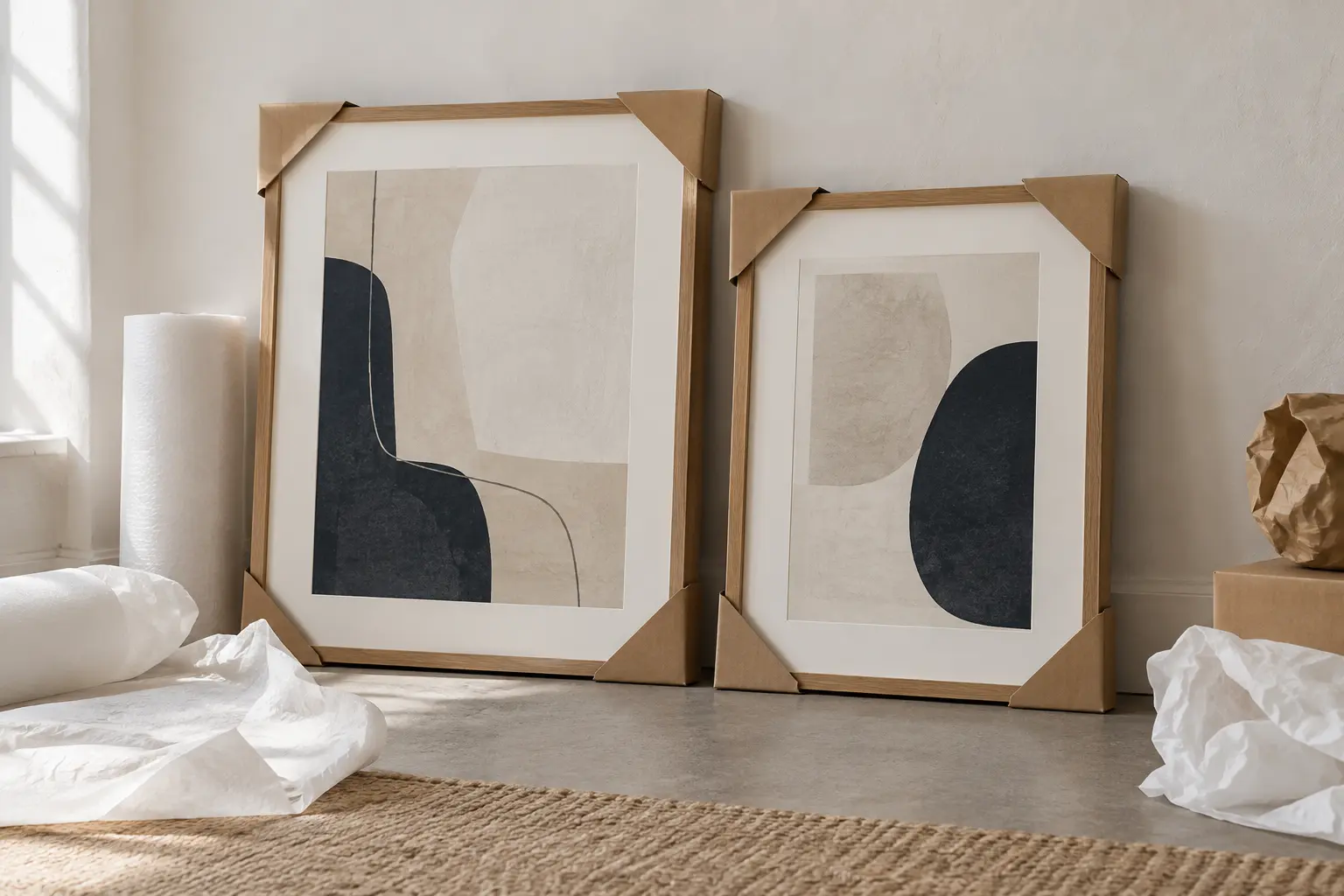
Objects with a story
Art and antique moving in Toronto and the GTA
An art and antique moving plan begins with a close look at each piece. Fragile surfaces, glazing, old joints and unusual shapes can all affect preparation. Describe the object and its condition, then ask us to assess suitable packing, handling and delivery for the actual journey.
What to record for fine art transport
List each artwork or antique with dimensions, materials and a useful description. Note glazing, frames, projecting parts, delicate finishes and any known instability. Identify whether an item is wall-mounted, free-standing or secured to another surface.
Mention repairs, loose fittings or existing damage rather than treating them as details to disclose later. We need to know which parts can be handled and where pressure may be inappropriate. For especially sensitive objects, seek advice from a conservator, maker or other relevant specialist before agreeing a packing approach.
Keep condition and value records distinct
For art and antique moving, take photographs and note visible marks before collection so you have a condition record for each object. Valuations, purchase records or other documentation may be relevant to coverage discussions, but they serve a different purpose from a handling assessment. Ask us what we require and keep sensitive records in an appropriate channel.
Do not assume a general household estimate automatically reflects the value of an antique or artwork. Discuss any declaration requirements, limitations and claims process before booking. This website does not value objects or promise that a particular insurance or liability arrangement will be available.
Compare artwork packing options
Ask whether the item requires surface protection, a dedicated box, a crate or another accepted method. The decision should account for the materials, dimensions, condition and expected handling, including any storage or transfer. A fragile object should not be treated as adequately protected simply because it is wrapped.
Identify who prepares the packing and who checks it at handover. If you intend to pack an item yourself, ask how that affects acceptance and coverage. Do not apply adhesive or packing material directly to a delicate surface without appropriate guidance for that object.
Separate antique furniture delivery and artwork placement from installation
Taking artwork down, disconnecting display lighting, removing anchors and hanging an object at the destination are separate tasks from transport. Explain what is needed and confirm who will perform each part. Do not assume we will alter walls or install hanging systems.
For antique furniture, describe any proposed disassembly and the condition of joints or hardware. Older construction may not tolerate methods suitable for newer pieces. Ask for assessment rather than treating dismantling as a convenient default when an item does not appear to fit through a doorway.
Check the access and receiving environment
Measure doorways, hallways, stairs and elevators, including the turns between them. Identify a clear receiving space where the object can be placed without immediate repositioning. Explain if the destination is under renovation or if other deliveries will occupy the route.
If storage is involved, ask the facility about conditions suitable for the object and confirm responsibility for each handoff. This website does not promise climate-controlled storage or conservation conditions. Establish the suitability of the environment and packaging with us, the storage operator and an object-care specialist.
What belongs in an art and antique moving agreement?
Ask what happens if we find instability, inadequate packing or access that differs from the description. An accepted plan should leave room to stop and reassess rather than force a fragile object through an unsuitable route. Confirm how changes would be authorized and charged.
Review the written estimate for each item, packing method, collection, transport and placement. Agree how condition is acknowledged on arrival and how concerns should be documented. Retain relevant packaging until you understand any inspection or reporting requirements, particularly where several parties are involved in the transfer.
From request to a confirmed plan
Select “Large furniture or specialty items” in the form. During follow-up, describe the objects, materials, condition, dimensions and any packing or installation needs. We must assess our capability and confirm the specific work we can accept.
We review your enquiry and assess the work before confirming availability, scope, price and booking terms. The enquiry form starts that process; it does not reserve a service. Before booking, keep our written estimate and make sure it reflects the work you have discussed with us.
Good questions to ask
Can art and antique moving be included in a household move?
That depends on the objects, packaging, transport arrangement and our assessment. Identify them separately and obtain an accepted handling plan rather than assuming they belong in a general load.
Will artwork be hung at the destination?
Hanging and installation are separate tasks. Request them explicitly and confirm who can perform the work; transport and placement do not automatically include wall mounting.
Do all valuable objects need a crate?
No single packing method suits every object. Ask for assessment based on the materials, condition, dimensions and journey, with specialist conservation input where appropriate.
Tell us what’s moving.
Start with the short quote form. We’ll review your request and follow up about the details, availability and an estimate.