Help where it matters most
Fragile item packing for Toronto homes
Fragile item packing can be limited to a kitchen, a collection of artwork or individual pieces while you pack the rest of your home. A partial packing request should identify exactly what needs attention. The item, its condition and the journey determine which preparation can be assessed.
Set the scope of a partial packing service
List the rooms, cupboards or individual objects you want packed. Separate fragile contents from ordinary items you will handle yourself. Include dimensions and a description of materials for larger or unusual pieces, such as a mirror, glass tabletop or framed work.
A phrase like “a few breakables” is difficult to estimate. Describe the quantity and type of contents: a cabinet of glassware, several framed pieces or selected electronics. Tell us which items are already packed and which still need assessment so the scope does not overlap or leave a gap.
Flag delicate surfaces before packing artwork and glass
Flag loose parts, damaged edges, old repairs, delicate finishes and anything that should not be placed under pressure. If an object has care instructions from a maker or conservator, share the relevant requirements during assessment. We must confirm whether we can meet them.
Fragility is not always visible. A piece can look sturdy while having unstable joints or sensitive surfaces. Be clear about what is known and what needs specialist advice. General packing assistance does not imply conservation expertise or an ability to prepare every unusual or valuable object.
Which materials are suitable for fragile item packing?
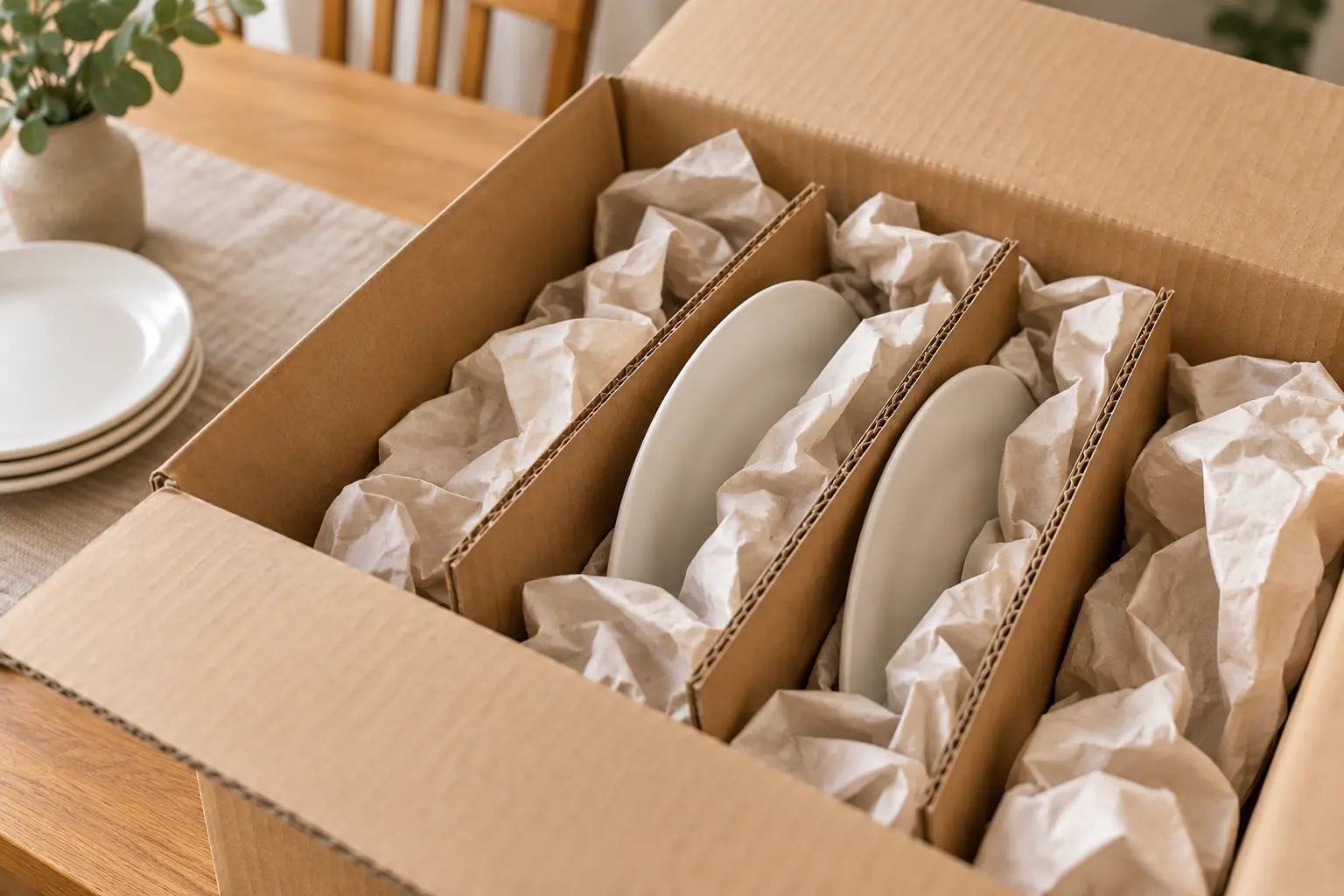
Ask what protection and containers are proposed for the accepted items. Confirm whether materials are included and whether a dedicated box or crate is being considered. Different objects may need different approaches even when they share a destination.
If you have original packaging, explain its condition and whether inserts or supports remain. Do not assume a reused box provides adequate protection simply because it once held the item. Any custom crating request needs its own assessment of dimensions, access, preparation and the handling expected during the journey.
Decide who handles packing dishes and other breakables
Agree which items we pack and which you pack. Use a clear location or marking system, and keep finished boxes separate from objects awaiting work. Ask how we identify the items we pack and what records are useful at collection.
If you change your mind about an item, update the scope before the packing begins. Mixing contents packed by us with later additions can make the original record unclear. Ask us how owner-packed items are accepted and how different packing responsibilities affect coverage or a concern reported after delivery.
Prepare access and technical tasks
Clear a work surface and a route for fragile item packing, and identify someone who can answer questions about each object. Wall-mounted items may need removal before packing. Equipment may require shutdown, backup or disconnection by its owner or an appropriate technician.
Packing does not automatically include taking down artwork, dismantling furniture, disconnecting appliances or reinstalling anything at the destination. Identify those tasks explicitly. If a fragile object cannot be handled until another person prepares it, make that dependency part of the schedule rather than an assumption on the packing day.
Plan how the items will be received
Explain whether the packed objects are moving directly to a home, passing through storage or travelling with another carrier. The proposed packing needs to be assessed against that journey. Ask how orientation and handling instructions will be communicated.
At delivery, identify who opens the packing and checks condition. Keep relevant materials until you understand our reporting process. Review the estimate for the item list, materials, preparation and any unpacking or removal work. Partial packing should be a precise, understandable scope rather than a small but undefined add-on.
From request to a confirmed plan
Choose the closest household or specialty category in the form. During follow-up, explain which fragile items or rooms need packing, who handles the rest and how the packed belongings will travel. We must assess the handling requirements and confirm the scope before accepting the work.
We review your enquiry and assess the work before confirming availability, scope, price and booking terms. The enquiry form starts that process; it does not reserve a service. Before booking, keep our written estimate and make sure it reflects the work you have discussed with us.
Good questions to ask
Can I request fragile item packing just for my kitchen?
Yes, describe the cupboards and contents to be included, along with anything you will pack yourself. We can then assess the materials and work required.
Is fragile packing the same as custom crating?
No. Crating is a separate method that may or may not be appropriate. The object and journey need assessment before a specific packing approach is confirmed.
Can I add items after you have packed a box?
Discuss changes with us. Adding contents can alter the packing and condition record, so keep responsibilities clear rather than modifying accepted packing without agreement.
Tell us what’s moving.
Start with the short quote form. We’ll review your request and follow up about the details, availability and an estimate.