Decide where you want help
Packing services for Toronto households
Packing services can cover a whole home or a few fragile items, and you can also request help with the boxes waiting at the other end. Start by deciding what you will pack and what you want assessed. Materials, preparation, timing and unpacking should all be clear before an estimate is accepted.
Choose between full-service packing and help with selected items
Full-service packing is a request to assess the contents of an agreed home or space. Partial packing focuses on selected rooms or items. Fragile packing gives particular attention to breakable or sensitive belongings. None of these labels establishes a fixed package without a detailed scope.
Walk through the property and identify the work you want help with. A kitchen, a collection of framed pieces or a home office may need a different preparation plan from clothing and linens. Explain those priorities rather than simply asking for “some packing”.
Make the inventory visible
List furniture, boxed contents and loose items, including storage areas, cupboards and items kept elsewhere. Identify belongings you will carry yourself, things that will remain and anything still being sorted. The estimate should reflect the items that are actually ready to be included.
Flag fragile, valuable, unusually heavy or delicate objects for separate assessment. Do not assume general household packing is suitable for every antique, artwork or piece of equipment. We may need photographs, dimensions or specialist guidance before confirming the method and work we can accept.
Review moving boxes and protective materials
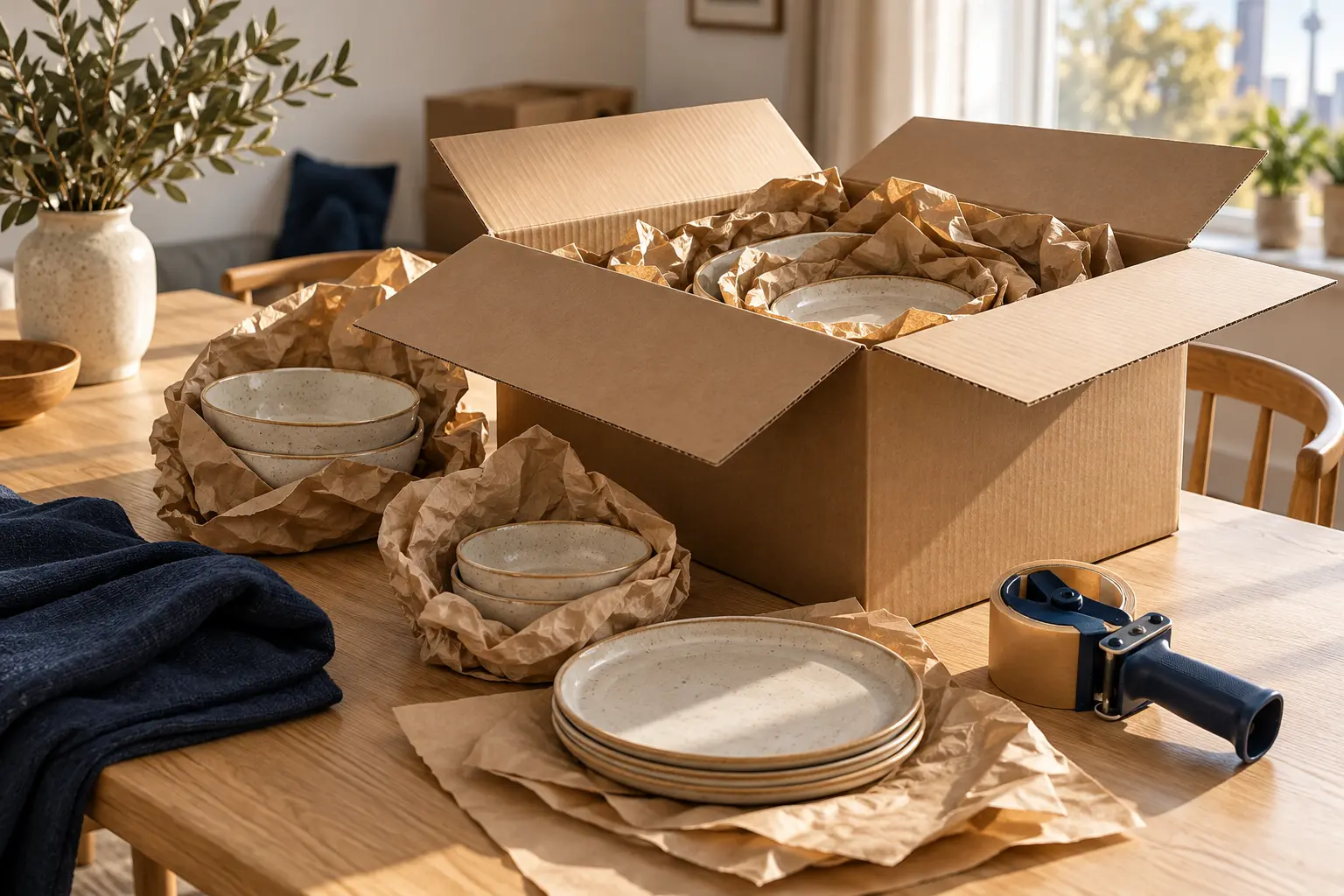
When comparing packing services, check which boxes, paper, protective wrapping and item-specific packaging are proposed for your belongings. Confirm whether materials are included in the estimate, charged separately or supplied by you. If you already have boxes, ask whether their size and condition are suitable for the agreed contents.
Packing is more than placing objects into a container. Preparation may include separating parts, protecting surfaces and keeping accessories associated with their main item. Ask who provides the instructions for technical equipment and who is responsible for any disconnection or dismantling before packing begins.
Split the work when booking packing services for selected rooms
If you are packing part of the home yourself, agree a clear division of rooms or item categories. Label boxes consistently and tell us which containers were packed by you. Ask about acceptance requirements and any implications for coverage or a later concern.
Avoid leaving an unclear mix of sealed boxes, loose objects and half-packed containers. Explain what remains unfinished during follow-up. We need to assess the actual amount of packing rather than discover additional rooms or fragile items after the time and materials have been planned.
Set aside what should not be packed
Keep identification, medications, keys, valuables and immediate essentials with you. Ask us about prohibited or restricted contents and preparation requirements. Do not place chemicals, fuels, batteries or other potentially restricted materials into ordinary boxes without confirmation.
Separate items that need another person’s preparation, such as connected appliances or sensitive equipment. Packing does not automatically include trade disconnections, data backup, cleaning or disposal. Make those responsibilities explicit so the packing stage begins with belongings that are ready for the accepted work.
Coordinate labels, room priorities and unpacking help
Use destination-room labels and identify the boxes needed first. Discuss whether packing happens before moving day or within another agreed schedule. Access, volume and building reservations all affect how the work needs to be sequenced.
If you also want unpacking, specify what that means: opening selected boxes, placing contents on accessible surfaces, organizing particular rooms or removing agreed packaging. Those are separate tasks and may have different limits. The written estimate should let you see where packing ends and the moving or unpacking work begins.
From request to a confirmed plan
Choose the closest household or specialty move type in the form. During follow-up, explain that you want packing assessed, which rooms or items are involved, and whether transport or unpacking is also part of the request.
We review your enquiry and assess the work before confirming availability, scope, price and booking terms. The enquiry form starts that process; it does not reserve a service. Before booking, keep our written estimate and make sure it reflects the work you have discussed with us.
Good questions to ask
Can I request packing services without a complete home move?
You can enquire about a packing scope. Explain the items, location, materials and what will happen after packing; we must confirm whether we can accommodate the request.
Are boxes and wrapping included?
That depends on the estimate. Ask which materials are supplied, whether they are charged separately and how unused or additional materials are handled.
Can I pack some rooms myself?
Yes, explain the division of work clearly. Ask us about owner-packed items, labelling and any preparation or coverage conditions that apply.
Keep planning your move
Tell us what’s moving.
Start with the short quote form. We’ll review your request and follow up about the details, availability and an estimate.