Plan for every level
Townhouse movers for Toronto homes with stairs and split levels
Townhouse movers often have to take beds, desks and sofas around stair turns on several levels before they reach the truck. Start with an inventory by level and work through the tightest turns between each room and the loading point.
Build a townhouse moving checklist by floor
List furniture and boxes for each level, including the basement, garage and any rooftop or outdoor area. Note where the heaviest or largest pieces begin and where they will finish in the new property. A bedroom count does not reveal how much work takes place above or below the entrance.
Identify pieces that will change floors at the destination. If a desk is going from a main-floor office to a loft, the final stair route needs assessment even if collection is straightforward. Include storage areas that do not appear in the usual room list.
Look closely at turns and landings
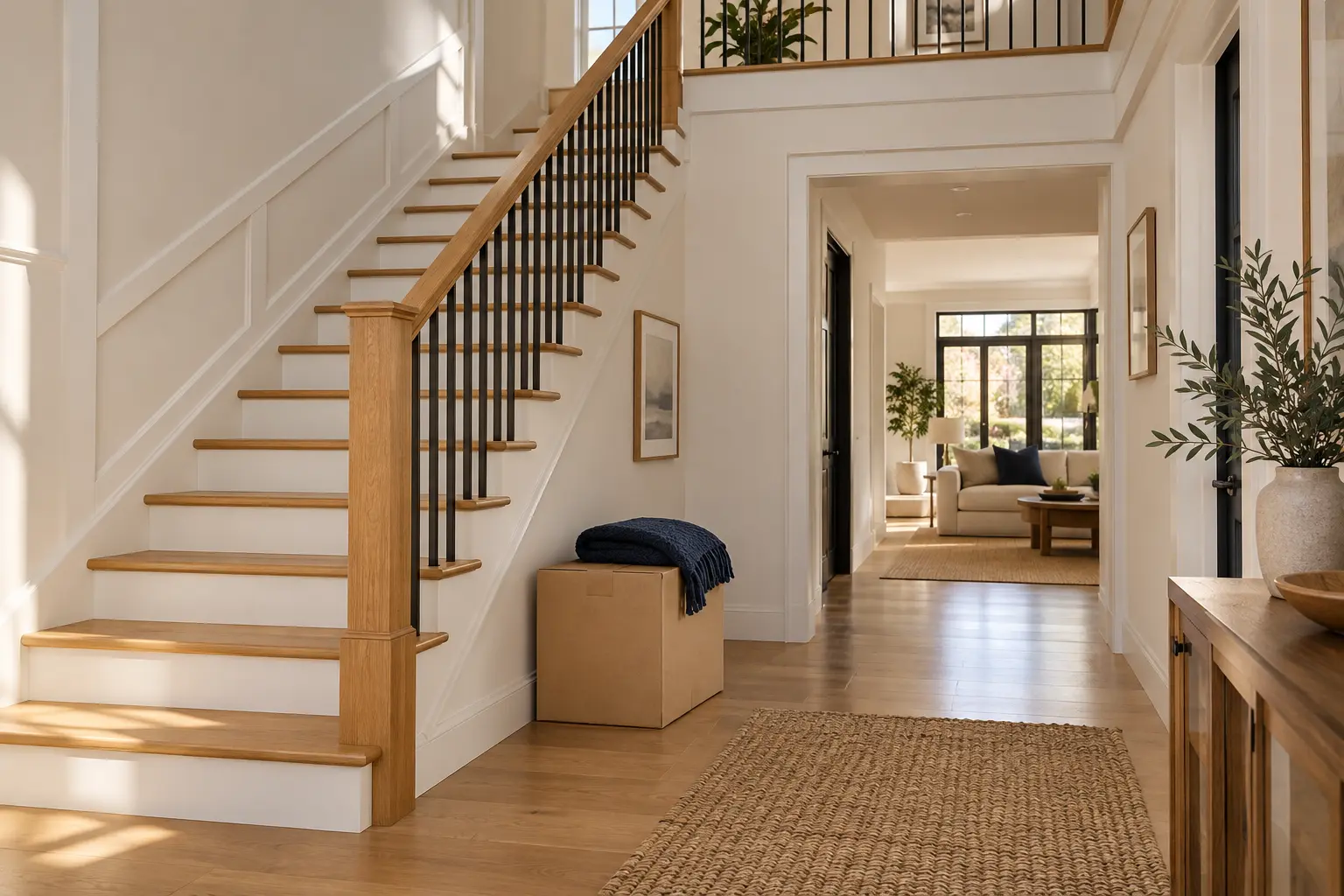
Townhouse stairs may be straight, switchback or interrupted by small landings. Measure tight points and describe ceiling height, handrails and nearby doors. Large mattresses, rigid sofas and tall cabinets can present different problems on the same staircase.
Tell us how oversized furniture originally entered the property. If it was assembled upstairs, moving it as one piece may not be possible. Ask about a realistic dismantling and reassembly plan before booking. Removing a railing or using an exterior route requires separate permission and assessment.
Check moving truck access before booking
Before townhouse movers plan to use a garage, visitor space or short driveway, check whether loading is permitted there. Explain whether access is from a public street, private lane or shared court. Note slopes, vehicle clearance, tight turning space and the distance from the likely loading position to the entrance.
For managed properties, ask about move notices, common-area rules and permitted vehicle locations. Do not assume that visitor parking can be reserved for a moving vehicle. Share confirmed instructions with us so access is part of the estimate rather than a day-of discovery.
Agree furniture preparation piece by piece
Beds, modular sofas and large desks may need to be separated to pass through a staircase. Identify the model or construction where possible, and keep assembly instructions and hardware together. Ask whether we can perform the required work and whether it is included in the estimate.
Built-in shelving, anchored cabinets, wall mounts and connected appliances need a different conversation. The moving scope may end at transporting a disconnected, free-standing item. Arrange other trades or permissions where required and avoid assuming removal or installation is part of the move.
Plan furniture placement by room and level
Use a simple list or room plan showing where major pieces will go. Label boxes with the level and room, particularly where several bedrooms or workspaces look similar. Decide which items need immediate access and which can go into a storage area.
A placement plan reduces unnecessary movement between floors and gives us a clear destination for each piece. If you want furniture rearranged after delivery, discuss that as part of the work. Carrying a large piece upstairs and then changing its destination can materially alter the job.
What should townhouse movers include for stairs and landings?
Ask us to describe the stair and floor-level assumptions in writing. Review the treatment of disassembly, long carries, heavy items, packing and any access limits. Confirm how additional work is approved if the destination plan or inventory changes.
Before the move, keep stairways, landings and entrances clear. Discuss floor protection and any building requirements with us. Keep children, pets and loose belongings away from the handling route, and arrange one person who can make placement decisions without blocking the space needed for the work.
From request to a confirmed plan
Choose the nearest house or apartment category in the form, then identify the property as a townhouse during follow-up. Explain the number of levels, stair layout, loading access and the destination floor for large furniture.
We review your enquiry and assess the work before confirming availability, scope, price and booking terms. The enquiry form starts that process; it does not reserve a service. Before booking, keep our written estimate and make sure it reflects the work you have discussed with us.
Good questions to ask
What do townhouse movers need to know about a split-level layout?
List the levels and the stair flights between them, including half flights and basement access. Describe where the large items begin and where they are going.
Can furniture be moved through a balcony or upper window?
Do not assume that route is available. It would require specific assessment, suitable equipment, permission and an accepted scope. Tell us about access concerns before booking.
Does the garage count in the inventory?
Yes, if its contents are moving. List furniture, tools, equipment and boxes separately, and ask us about preparation and restricted items.
Tell us what’s moving.
Start with the short quote form. We’ll review your request and follow up about the details, availability and an estimate.