A more prepared move
A room-by-room packing checklist
Organize your packing checklist by the room each box will enter. A simple destination label, a manageable box and a record of fragile contents make unloading more useful. Confirm our packing requirements and restricted-item list before starting.
Set up one labelling system
Write a destination room and a short contents description on more than one face of each box. Add a box number if you want an inventory you can check on arrival. Use “fragile” only alongside a useful description; a label does not replace suitable packaging.
Separate the items that travel with you: keys, medication, identification, important documents, essential chargers and items you cannot be without if delivery timing changes. Keep this group away from the main load and tell anyone helping with packing that it must not be loaded.
Packing dishes and kitchen equipment
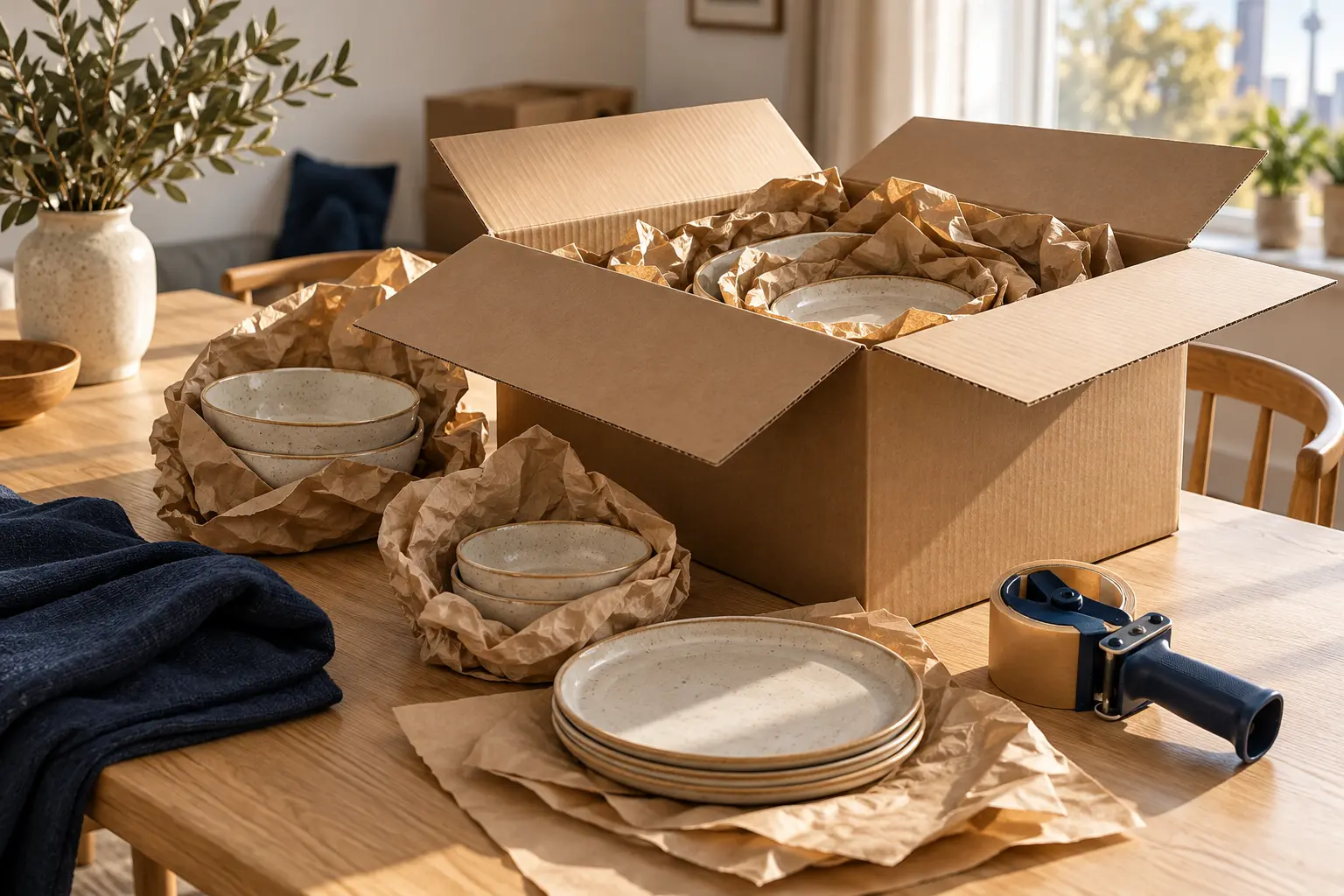
For the kitchen packing checklist, start by emptying cupboards before choosing box sizes. Separate breakables from dense items and avoid creating boxes that are awkward to handle. Use appropriate cushioning and fill empty space so contents cannot move freely. For valuable or unusually fragile pieces, ask whether professional packing is appropriate.
- ☐ Sort food and household products; ask us what we will accept.
- ☐ Wrap and separate dishes, glasses and fragile serving pieces using suitable materials.
- ☐ Keep sharp utensils protected and clearly identified.
- ☐ Empty and prepare small appliances according to their instructions.
- ☐ Label one first-use kitchen box with basic utensils and essential supplies.
Bedrooms, closets and bathrooms
Pack the items you will not need before moving day first, then leave a clearly marked essentials group. Keep loose hardware from beds and shelving in labelled bags linked to the item. Ask us what must be emptied from furniture before it is moved.
- ☐ Label bedding by room and keep first-night bedding accessible.
- ☐ Separate clothing for immediate use from the main wardrobe boxes.
- ☐ Keep medication and important personal items with you.
- ☐ Secure toiletries against leakage and confirm any transport restrictions.
- ☐ Identify bed disassembly and reassembly in the agreed scope.
Packing electronics, books and living room items
Photograph cable connections if that will help you reconnect equipment, then label cables and accessories by device. Back up important data before devices are disconnected. Follow manufacturer instructions for screens, printers and other equipment; avoid assuming one packaging method fits every product.
Use smaller manageable boxes for dense books and keep frames or artwork separate from general contents. Provide us with details of unusually valuable, delicate or oversized items before packing them. A protective method suitable for an ordinary household object may be inappropriate for a fragile artwork.
- ☐ Label remotes, power supplies and cables with the device they belong to.
- ☐ Record large-screen dimensions and retain appropriate original packaging where available.
- ☐ Separate artwork and delicate display objects for a packing assessment.
- ☐ Identify detachable furniture parts and keep their hardware together.
Garage, garden and storage spaces
These areas often contain items that need a different arrangement from ordinary household boxes. Identify fuel, chemicals, batteries, tools, machinery and other potentially restricted materials. Ask us what we can accept and how accepted items must be prepared. Do not conceal a restricted item inside a mixed box.
Clean and dry items where appropriate, separate loose components and list unusually heavy equipment. If an item needs a qualified person to disconnect or prepare it, arrange that work in advance. The moving team should not be expected to improvise technical preparation on arrival.
- ☐ Inventory sheds, lockers and outdoor furniture separately.
- ☐ Confirm our restrictions before packing household products or equipment.
- ☐ Label tools and removable components clearly.
- ☐ Keep disposal or donation items apart from the transport inventory.
Finish with a readiness check
Take your packing checklist through every room and storage area, checking off each item against your inventory. Close and label completed boxes, leave carrying paths clear and identify anything still unpacked. Update us if the amount or preparation status has changed.
If you need packing support, specify whether it covers the whole household, selected rooms or only fragile pieces. Ask what materials are included, how owner-packed items are treated and who removes packaging after delivery. Those are scope decisions, not automatic features of a transport request.
Good questions to ask
Should every box be the same size?
No. Choose suitable packaging for the contents and keep boxes manageable. Dense contents, fragile objects and large equipment have different needs.
Does a fragile label protect the contents?
No. It communicates a handling concern, but appropriate packaging and a handling plan agreed with us are still needed.
Can I leave packing unfinished for the moving team?
Only if that work has been discussed and accepted. Tell us what remains so we can assess time, materials and scheduling.
Keep planning your move
Useful sources
Start with the essentials
Send your contact details, starting and destination postal codes, and move type. We’ll review your request and confirm availability, the estimate and booking terms.