A more prepared move
Condo elevator bookings and move requirements
Two condo elevator bookings can each be confirmed and still leave too little time for travel. Start by collecting each building’s instructions, then give us enough information to connect the collection window, travel and destination access. The checklist below helps turn separate bookings into a practical plan.
Get the building’s actual move instructions
Ask the property manager or concierge for the current move package at both addresses. Condo rules are specific to the corporation; the Condominium Authority of Ontario explains that they govern everyday activity and can include parking. Do not copy a previous building’s requirements or assume that a neighbour’s arrangement applies to your unit.
Find out who may book a move, how the reservation is confirmed and whether an incoming resident needs the owner’s authorization. If management asks for deposits, documents or insurance information, obtain the exact requirements and deadlines. Ask us to supply any requested company documents directly through the appropriate process; a website enquiry is not proof that those documents exist.
Record the window, not just the date
For both condo elevator bookings, write down the start and end of the reserved period, the move-in or move-out address, the elevator identifier if supplied, and the person responsible for releasing it. Ask whether the window covers vehicle arrival, loading, elevator use or completion of the entire move. Those are different milestones.
Confirm what happens if the preceding move runs late, the elevator is out of service or we cannot reach the building on time. Ask how a window can be changed and who can authorize an extension. Do not promise that we can finish within a short slot until we have assessed the inventory and carrying route.
Inspect the whole route
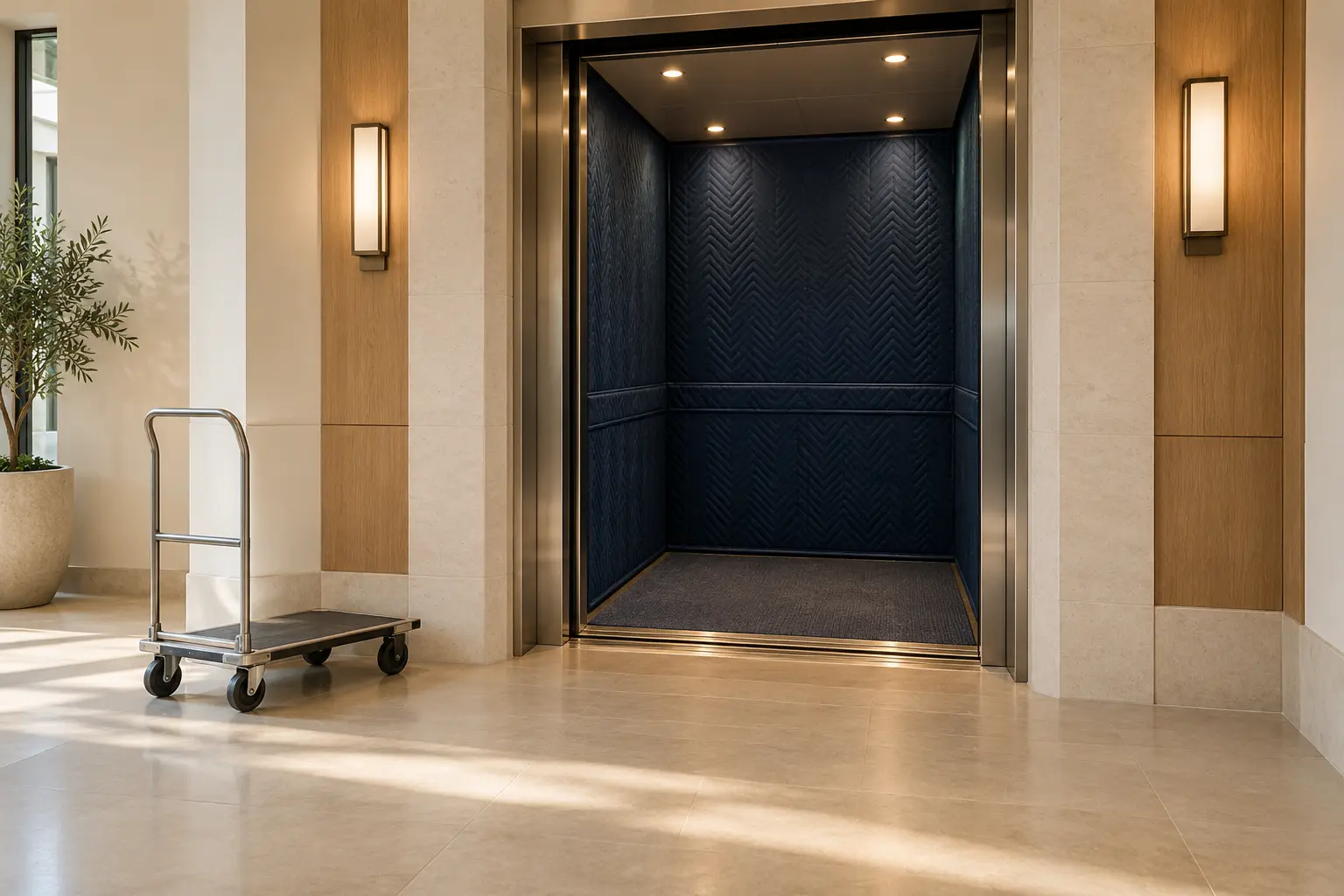
The elevator car is only one possible restriction. Check the loading entrance, any overhead barrier, the dock door, corridor turns, elevator doorway, car interior and unit entrance. Ask management for reliable vehicle-clearance information rather than estimating it from a photo.
Measure unusually large furniture in its transport configuration and disclose whether legs, shelves or a headboard can be removed. Include the thickness of protective wrapping in the assessment discussion. If a piece is doubtful, get a plan before moving day. Using stairs, another elevator or an exterior route requires a separate review and any relevant building approval; it is not a routine fallback.
A reusable building access sheet
Copy or print this list and complete it for each address. Keep the building’s written instructions with it so a short summary does not replace the full requirements.
- Address and unit: ____________________ Move-in / move-out: ____________________
- Booking date and exact window: ____________________ Confirmation reference: ____________________
- Permitted moving entrance and vehicle route: ________________________________________
- Loading location, clearances and maximum vehicle dimensions supplied by management: ____________________
- Elevator dimensions and doorway measurements: ________________________________________
- Protection requirements and who supplies or installs protection: ____________________
- Documents, deposits or fees requested, responsible person and deadline: ____________________
- Building contact on the day and procedure for late arrival or an elevator fault: ____________________
- Keys, fobs and access permissions available from: ____________________ at: ____________________
Give the estimate the same assumptions
Share the building sheet before accepting an estimate. It should be clear whether the price assumes exclusive elevator use, a particular loading position, a certain carrying distance or fully packed contents. Ask how waiting time, a changed route or an unavailable loading bay would be handled.
If packing is requested on the same day, establish where it sits in the schedule. Packing a household and moving it through a short elevator window may require a different arrangement from transporting already packed boxes. Similarly, identify whether furniture assembly and unpacking happen within the building’s move period or after the main unload.
Recheck your condo elevator bookings before moving day
Reconfirm that both bookings remain active, the designated entrance is usable and the person meeting us has keys and a working contact number. Clear internal paths without storing belongings in shared corridors. Keep pets and children away from the carrying route and set aside the essentials you will take yourself.
At completion, follow the building’s handback procedure, check the used common-area route and retain any inspection or deposit documentation. If there is an issue, record it factually with photos and contact us and the appropriate building representative. The building reservation, our moving contract and any goods-protection terms are separate arrangements; keep all three available.
Good questions to ask
Does every condo use the same moving hours?
No. Ask each building for its current instructions and available reservation windows.
Does booking the elevator book the mover?
No. The building controls its access arrangements. We separately confirm our availability, the estimate and the moving contract.
Can an oversized sofa go in the passenger elevator?
That needs measurement, our assessment and building permission. Do not assume a different elevator or stair route is available.
Keep planning your move
Useful sources
Start with the essentials
Send your contact details, starting and destination postal codes, and move type. We’ll review your request and confirm availability, the estimate and booking terms.